TL;DR
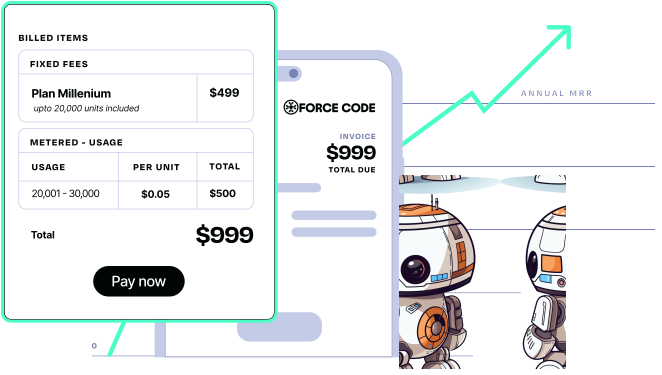
- Cloud billing is a blend of electronic billing and cloud computing aimed at streamlining invoicing and payments for cloud services.
- If you're looking to streamline your financial operations with cloud billing, you should know about the top cloud billing companies shaping the industry.
- Togai offers a versatile platform with usage-based pricing and automated billing processes, while Recurly simplifies subscription billing and tax compliance.
- Having a robust billing relationship is crucial for customer interaction and a well-managed billing system.
- Zuora's platform is ideal for managing recurring revenue streams, and Chargify caters to SaaS and Web 2.0 businesses with its customizable billing scenarios.
- Aria Systems provides a scalable solution for monetization models, OneBill automates the quote-to-cash lifecycle, and Stripe Billing supports global SaaS expansion with its comprehensive financial processes.
- In a 2023 survey, 48% of CFOs planned to increase tech investments to streamline financial operations.
- Each company brings unique features to the table, ensuring there's a solution that fits your specific needs. Embrace a cloud billing solution that not only manages finances but also propels your business growth.
Cloud billing is a sophisticated blend of electronic billing and cloud computing. It creates a comprehensive ecosystem for managing the invoicing and payments of cloud-based services. This ecosystem encompasses a wide array of services, solutions, and products aimed at streamlining the process of sending, monitoring, and creating payments and invoices.
Having a robust billing relationship is crucial for any company. It represents a key point of customer interaction, underscoring the importance of a well-managed billing system.
Cloud billing software, known for its safety and cost-effectiveness, has become the go-to technology for businesses of all sizes, from startups to large corporations. It revolutionizes the business billing landscape by offering easier access to data and enhancing billing flexibility.
Given its significant impact, cloud billing has garnered the adoption and attention of numerous companies, each offering top-notch services in this domain. Let's delve into the details of these companies and explore how they contribute to the cloud billing process.
The 7 Leading Cloud Billing Companies
In a 2023 survey involving 260 CFOs, nearly half (48%) expressed their intention to boost their tech investments to streamline financial operations (Lawrence, 2023). As businesses navigate through an ever-evolving landscape, the importance of efficient billing software can't be overstated. This is particularly important for organizations of all sizes, be it big or small. The search for the most effective cloud billing software is more relevant than ever. Companies nowadays strive for both convenience and accuracy in handling their financial dealings, from invoice creation to payment monitoring.
Let's shine a spotlight on the top 7 global companies that are leading the way in providing cloud billing solutions.
1. Togai
Togai stands out among other cloud billing solutions with its all-encompassing platform designed to streamline the pricing, metering, and billing processes for cloud-based services.
Pros:
- Togai supports an array of pricing models, such as usage-based, tiered, and custom rates. This flexibility allows businesses to customize their billing to align with specific customer preferences and market trends.
- By automating billing processes, Togai effectively reduces the chances of revenue leakage that often plagues manual systems, freeing up valuable time for finance teams each month.
- The platform serves as a central hub for usage and revenue analytics, offering businesses a comprehensive view of their revenue data. This capability enables companies to swiftly adjust pricing and billing strategies to remain competitive and responsive to market dynamics.
Also, read about Demystifying Metered Billing in Cloud Infrastructure
2. Recurly
Based in San Francisco, CA, Recurly stands as a top choice for businesses looking for a recurring billing platform that simplifies subscription billing. It is designed to help businesses accelerate revenue generation, scale efficiently, unlock new growth opportunities, and enhance customer experiences.
Pros:
- With automated tax solutions, Recurly ensures businesses can comply with international tax regulations without the headache.
- The platform automates the creation of invoices, incorporating one-time charges, credits, and shipping fees, making billing seamless.
- Recurly eliminates manual tasks by offering smooth integrations with essential business systems like CRM, ERP, and accounting software platforms, streamlining workflows and enhancing efficiency.
3. Zuora
Zuora, with its headquarters in the United States, is at the forefront of cloud-based subscription management platforms. It helps businesses expand their recurring revenue streams.
Pros:
- Zuora's comprehensive billing capabilities mean businesses can eliminate the need for IT intervention and the complexities of integrating various tools.
- Whether it's billing for specific IP addresses or CPU instances, Zuora makes it easy for any provider to bill their users accurately for precise services.
- Recognized for its straightforward and automated cloud billing services, Zuora has become a preferred partner for many companies looking to streamline their subscription services.
4. Chargify
Founded in 2014, Chargify has emerged as a key player in subscription management and recurring billing, specifically catering to the needs of SaaS companies and Web 2.0 businesses.
Pros:
- Chargify is designed to handle every imaginable recurring billing scenario, offering a level of versatility that's hard to match.
- Within minutes of signing up, users gain access to a wide range of customizable features, including coupons, plan options, straightforward tax management, and subscription add-ons.
- Chargify aims to take the stress out of billing, allowing businesses to concentrate on what they do best—creating compelling web applications—by managing the billing process efficiently and effectively.
5. Aria Systems
Based in the United States, Aria Systems offers a cloud-based platform that is renowned for its power and scalability. This platform empowers businesses to swiftly capitalize on emerging market opportunities and satisfy customer demands by quickly rolling out new monetization models and launching new plans.
Pros:
- Aria is crafted to unlock endless monetization possibilities, ensuring maximum return from every customer interaction, whether provisioning, servicing, or billing. This approach significantly shortens the time to market.
- The Aria Billing Cloud transforms the complexities of business operations into automated and flexible billing experiences, making it easier for companies to adapt and thrive.
- Aria leverages business process automation to reduce risks, speed up operations, and reduce manual tasks. It also seamlessly integrates with advanced AI technologies, including large language models and Generative AI solutions, to further enhance customer interactions and boost internal efficiency.
6. OneBill
OneBill stands out as an all-encompassing cloud-based billing and revenue management platform meticulously crafted to automate and refine businesses' full quote-to-cash lifecycle. It's versatile enough to handle any mix of billing methods, whether one-time, recurring, dynamic, hybrid, or usage-based pricing.
Pros:
- OneBill significantly simplifies and automates the quote-to-cash journey, minimizing errors in sales quotes and boosting operational efficiency.
- With powerful tools designed to manage complex, multi-level channel partnerships, OneBill ensures real-time settlements and fosters transparent relationships with partners.
- By merging invoicing, customer management, and billing into a single solution, OneBill not only makes operations smoother but also enhances the overall customer experience.
7. Stripe
Stripe Billing is engineered to refine cloud billing procedures, cut down on administrative tasks, and promote global expansion for SaaS and cloud-centric businesses. It consolidates various financial processes, including subscriptions, payments, revenue management, and invoicing, thereby increasing recurring revenue, reducing expenses, and enhancing customer satisfaction.
Pros:
- Whether your business follows per-seat pricing or utilizes metered billing, Stripe caters to all types of SaaS business models efficiently.
- Stripe streamlines the payment, billing, revenue, and tax processes. This automation not only helps recover more revenue but also significantly improves operational efficiency.
- For businesses that operate on a subscription-based model, Stripe presents an outstanding payment gateway and billing solution that perfectly aligns with the demands of subscription services.
When You Choose, Always Choose The Best
When it comes to choosing cloud billing solutions, businesses are presented with a plethora of options, each with its distinctive features and benefits. From user-friendly interfaces and comprehensive reporting to seamless integration capabilities and scalability, there's a billing solution out there that perfectly matches your specific requirements, as demonstrated by the various cloud billing software solutions we've explored.
As you navigate through the process of choosing the ideal business software for your company, aim for a solution that does more than just streamline your financial operations. Look for one that enables your organization to flourish. The billing software sector is thriving and is anticipated to continue its growth trajectory in the foreseeable future. Making the right choice could significantly advantage your organization.
In the ever-evolving cloud billing market, where efficient cost management and operational flexibility are paramount, Togai has emerged as a leader with its cutting-edge cloud billing solution. Togai's usage-based billing software tackles the challenges of managing cloud service costs head-on, offering functionalities like real-time usage monitoring, deep analytics, and adaptable billing. Schedule a demo today to discover how Togai's offerings can revolutionize your approach to cloud billing and enhance your operational efficiency.